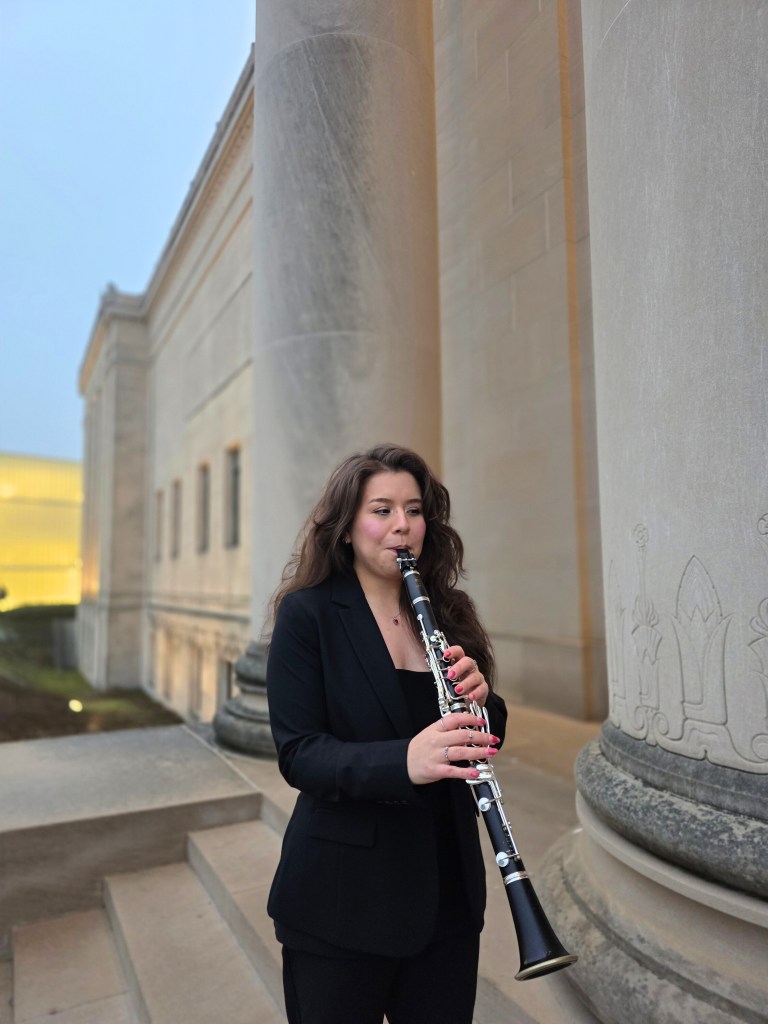
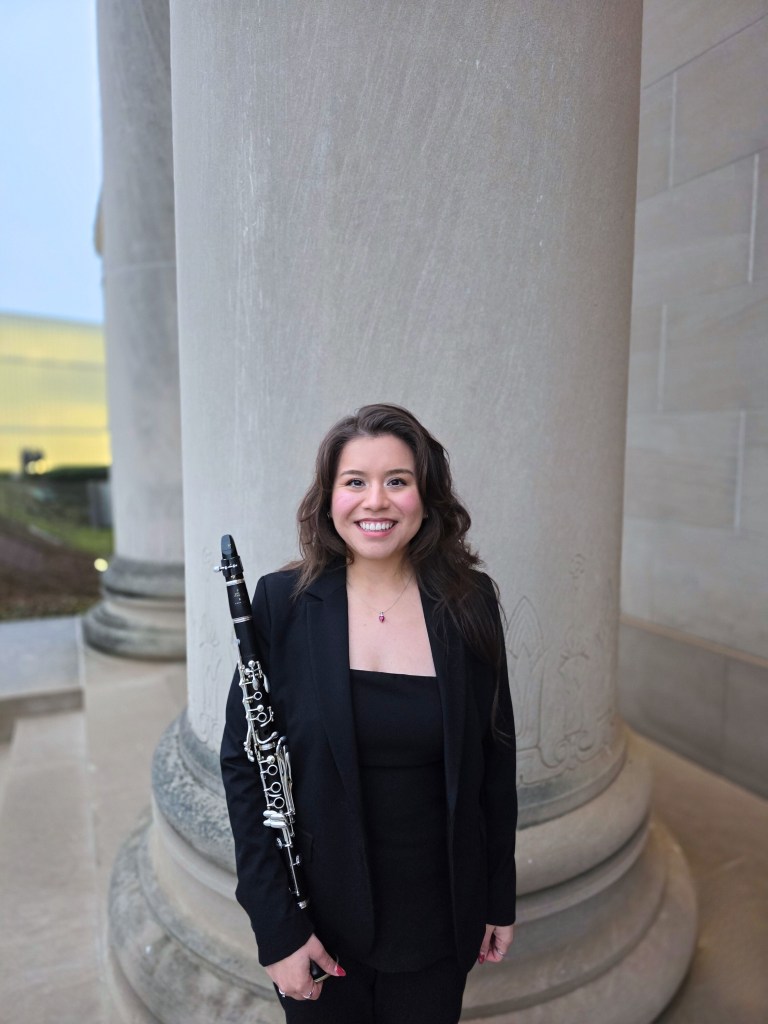
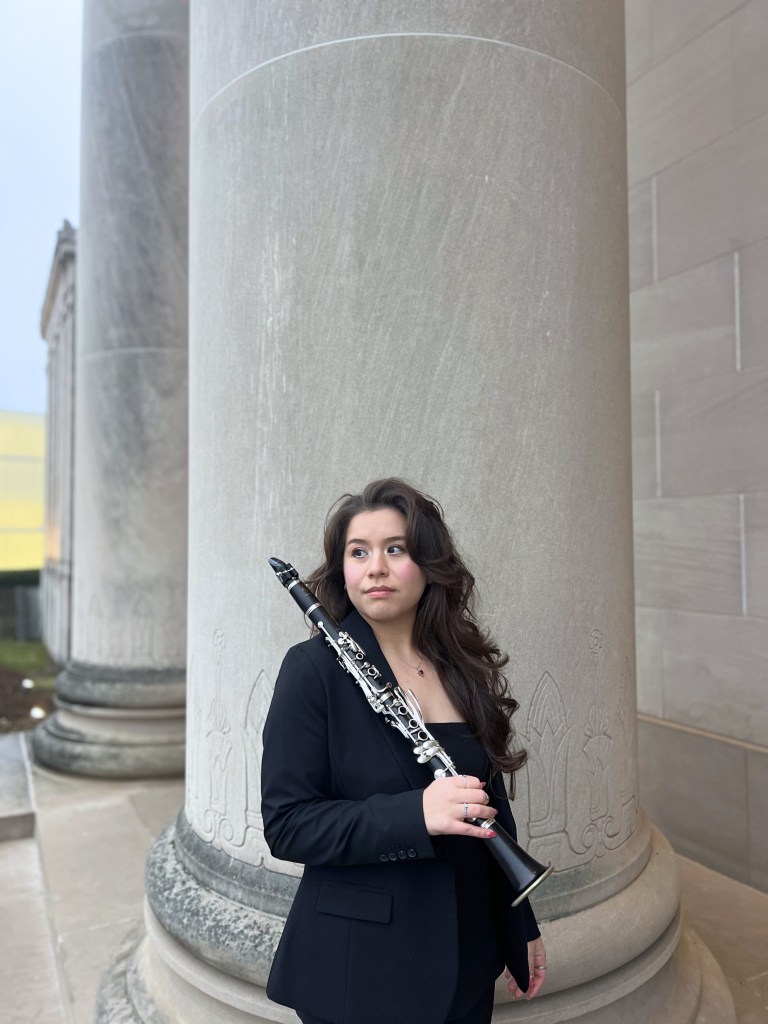
Marie Gallardo is a clarinetist and educator from Seattle, Washington, and recently completed her Doctor of Musical Arts in Clarinet Performance at the University of Missouri – Kansas City Conservatory, where she studied with Dr. Jane Carl. She is deeply committed to amplifying underrepresented voices in classical music, with a particular focus on clarinet repertoire from Latin America.
Gallardo’s doctoral research centers on Latin American music for the clarinet, culminating in two recitals that highlighted rarely performed works from Guatemala and other Central American countries. Her work aims to expand awareness and access to this rich musical heritage through performance, scholarship, and advocacy.
As an active performer, Gallardo has appeared internationally, including a tour of China, and in New York City with the Harlem Chamber Players, where she premiered a new piece by Guatemalan composer Sergio Reyes. In 2024, she was named a finalist in the UMKC Concerto/Aria Competition.
She has taught privately and at the university level, holding instructional roles at the University of Akron, Strongsville Academy of Music, and UMKC. Gallardo has also participated in masterclasses with prominent artists such as Anthony McGill, John Bruce Yeh, and Alexander Fiterstein. She is a recipient of the Opportunity Fellowship at UMKC.
Through performance, teaching, and research, Marie Gallardo is dedicated to reshaping the classical music landscape by championing the stories and sounds of Latin America, starting with the clarinet.
Why I chose this topic:
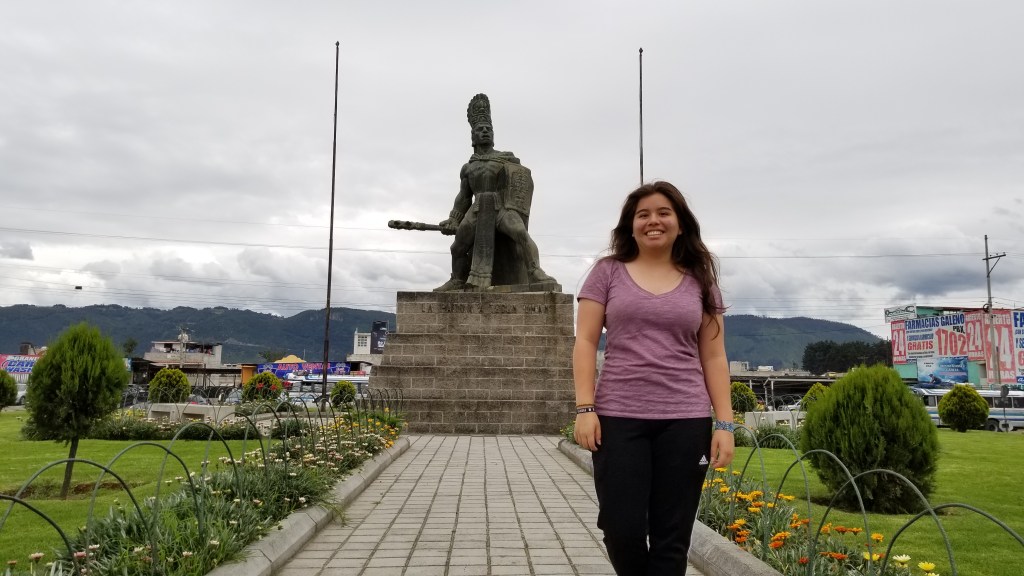
This is a topic that is close to my heart. Born into a Guatemalan American family, the country has been influential throughout my life. Both of my parents were born in the city of Huehuetenango, which is known for its rich indigenous culture, natural beauty, and historical significance. In Guatemala, there are 22 various Indigenous Maya communities, and the Mam and Q’anjob’al are ever present in Huehuetenango. This is also home of the Cuchumatanes Mountains, one of the highest non-volcanic mountain ranges in Central America, where many of the Maya groups live. These mountains are known for their biodiversity and as Guatemala’s top producer of high-quality coffee. Huehuetenango was heavily affected during Guatemala’s Civil War in the latter half of the 20th century. My parents emigrated to California in the 90’s, where I was born and later moved to Washington state, where I was raised. Despite the distance, the traditions and stories of Guatemala have always held a strong presence in my life. I grew up hearing Spanish and English in the house, eating Guatemalan and American cuisine, listening to music from Guatemala, and hearing stories of my heritage.
I have chosen this topic of Guatemalan music for the clarinet for two reasons: not only as an exploration of underrepresented music and composers but a celebration of my heritage. This research celebrates the underrepresented tradition of Guatemalan music for the clarinet, exploring its distinctive synthesis of Maya, African, and European influences. Through this performance and discussion, I aim to bring visibility to Guatemalan composers and musical forms, reflecting on how these diverse influences have shaped a musical identity rooted in resilience and cultural pride. This project also honors my own Guatemalan heritage, illustrating how music serves as a bridge to rediscover and celebrate a complex history and identity. I will perform four works by Guatemalan composers to present the various techniques these composers use to showcase how Guatemalan music is continuously developing, evolving, and worth further exploration.
Throughout my research, it was clear that Latin American music is increasingly researched and appreciated, but Guatemalan music remains largely undiscovered and under performed. There are many databases, dissertations, and websites geared toward Latin American music, but rarely include the smaller countries like Guatemala. Notable sources of Latin American music include Dr. Isabel Thompson’s dissertation “A Catalogue of Latin American Music for Clarinet and Piano,” which includes a variety of works from composers across many of the larger Latin American countries in various difficulties for the performer. Another is Dr. Ben Redwine’s website “Clarinet Latin American Repertoire Initiative Network,” which is a great source of music that again includes solo, and chamber works from the larger Latin American countries with links to where it can be found. The scarcity of Central American countries music, and especially Guatemalan, may stem from their smaller size and population, and the political struggle they have faced. Guatemala has a turbulent past, including a devastating civil war that lasted from 1960 to 1996, that lead to countless human rights violations and the genocide of Maya communities. This conflict was deeply rooted in land distribution issues, with the indigenous Maya people suffering the most severe consequences.
*This is an excerpt from Marie Gallardo’s DMA Lecture Recital on Guatemalan Music for the Clarinet presented on November 16, 2024 in Grant Recital Hall at the University of Missouri – Kansas City Conservatory.
 Guatemalan Music for the Clarinet